




















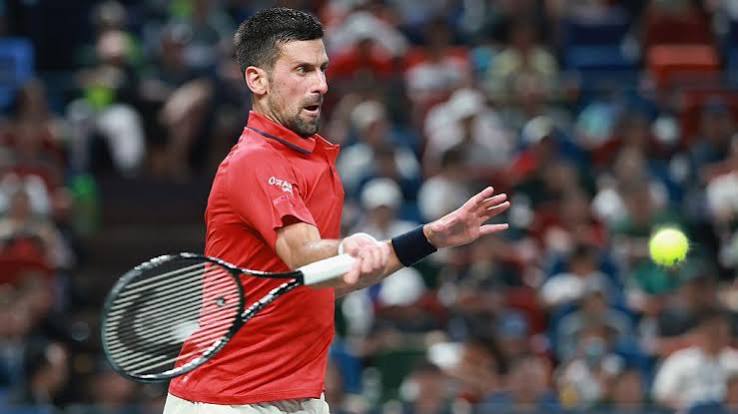
The most surprising part of this defeat is the timing.
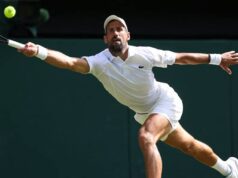
Djokovic arrived in Shanghai after winning the China Open for a record-extending seventh time. The Beijing tournament was a reminder that, even at 39, he remains capable of competing with the world’s best players. He defeated Alexander Zverev in the quarter-finals and Daniil Medvedev in the semi-finals before claiming the title when Alex de Minaur retired during the final with a groin injury.
That run made his Shanghai exit even more difficult to predict.
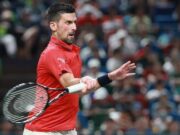
Three days after celebrating his latest trophy, Djokovic looked less comfortable against Hurkacz. He struggled to find the same rhythm he had shown in Beijing, and his opponent made him pay whenever an opening appeared.
Djokovic acknowledged afterward that he was more tired and did not feel fresh. He also pointed to the difference between the playing conditions in Beijing and Shanghai, explaining that the faster Shanghai surface made the adjustment difficult.
That is an important distinction. A loss after a demanding tournament does not automatically mean a player’s career is approaching its end. It can simply mean that the schedule, conditions, and opponent combined to create a difficult assignment.
But at 39, recovery becomes a bigger part of the conversation. The challenge is not only whether Djokovic can produce elite tennis. It is whether he can reproduce that level often enough while managing the physical demands of a long season.
Hurkacz Did More Than Wait for Djokovic to Make Mistakes
Djokovic deserves credit for acknowledging his own difficulties, but Hurkacz deserves equal attention for how he won.
The Polish player entered the match having lost all eight of his previous meetings with Djokovic. That record could have made the contest intimidating, especially against a player who has spent years turning difficult situations into victories.
Instead, Hurkacz played with confidence and took control of the match.
He hit 13 aces and 28 winners, using his powerful serve to limit Djokovic’s opportunities on return. Hurkacz won the first set 6–4 after breaking Djokovic late, then secured another break in the second set on his way to a 6–3 finish. The match lasted just 87 minutes. <Cite refs={[“turn116530news7″,”turn116530search1”]}/>
The numbers tell a story of their own. Djokovic was not simply beaten by an opponent waiting for him to tire. Hurkacz delivered a strong performance that placed constant pressure on the Serbian’s serve and gave him few easy opportunities to recover.
This matters because age debates can sometimes overshadow the achievements of the player on the other side of the net.
Hurkacz is a former world No. 6 and the 2023 Shanghai champion. His serve can trouble even the best returners, and his performance showed that he remains capable of beating elite opposition when his game is working.
Djokovic’s fatigue may have contributed to the result, but Hurkacz still had to execute. He did exactly that.
The Bigger Warning Is the Cost of Playing Week After Week
The modern tennis calendar places enormous demands on players who compete across multiple tournaments, surfaces, and countries.
A successful run can create a difficult choice. Players want to build on their momentum, earn ranking points, and collect titles, but continuing immediately after a deep tournament run can leave limited time for recovery.
Djokovic’s Beijing-to-Shanghai turnaround illustrates that tension.
He had just completed a demanding tournament and then faced an opponent with a powerful serve on a different surface. The transition offered little room to settle into the new conditions before the pressure arrived.
This is not a problem exclusive to older players. Younger stars also experience fatigue and injuries. The difference is that Djokovic’s age makes every difficult performance a potential headline about retirement or decline.
The smarter question is whether his schedule needs to become more selective.
Djokovic has already proved that he can still win important matches. His next challenge may be deciding which tournaments give him the best opportunity to compete at his highest level, rather than attempting to play every event as though his physical demands have not changed.
There is a trade-off. Playing fewer tournaments can mean sacrificing ranking points and opportunities, while playing too frequently can make it harder to arrive fresh for the biggest events.
Finding the right balance may matter more to Djokovic now than simply adding another tournament to his schedule.
His Grand Slam Ambitions Make Every Setback More Interesting
The biggest reason fans continue to watch Djokovic is his record at the sport’s most important tournaments.
He has won 24 Grand Slam singles titles, an achievement that places him among the most successful players in tennis history. His experience, returning ability, movement, and mental resilience have allowed him to remain competitive long after many players from his generation have retired.
That history makes it tempting to interpret every defeat as a sign of what comes next.
Earlier in 2026, Djokovic reached the Australian Open final. However, he also suffered a first-round exit at the US Open, his earliest defeat at a Grand Slam since the 2006 Australian Open. His Shanghai loss adds another difficult result to a season that has contained both major highs and frustrating setbacks. <Cite refs={[“turn116530news7″,”turn116530search4”]}/>
The contrasting results suggest that Djokovic remains capable of producing outstanding tennis, but consistency is an increasingly important question.
A player does not need to dominate every week to win a Grand Slam. The challenge is arriving at the major tournaments healthy, prepared, and able to sustain the level required across multiple rounds.
For Djokovic, a carefully managed schedule could be more valuable than chasing every available opportunity. If he can preserve his energy for the biggest events, the Shanghai defeat may become a brief interruption rather than a turning point.
That is still an assessment, not a guarantee. His future results will depend on his fitness, preparation, opponents, and ability to adapt.
The ATP Finals Race Adds Another Layer of Pressure
Djokovic’s Shanghai exit also has consequences beyond the immediate disappointment.
The Serbian is fighting for a place at the season-ending ATP Finals in Turin, where the leading players compete after the regular season. His early exit means he has missed an opportunity to strengthen his position during a critical stage of the calendar.
Following the Shanghai defeat, Tennis365 reported that Djokovic stood ninth in the ATP Race to Turin, effectively occupying the final qualifying position after Jannik Sinner ended his season early. The Serbian’s position remained vulnerable to results from players chasing him. <Cite refs={[“turn116530search5”]}/>
That gives Djokovic another reason to be selective about his remaining schedule while still considering the importance of qualification.
According to the Shanghai tournament’s official report, Djokovic said he planned to play at the Paris Masters next and hoped to achieve a strong result there. <Cite refs={[“turn116530search0”]}/>
Paris could therefore be an important opportunity to collect points and rebuild momentum. But it also raises a familiar dilemma: does he need more competition to secure his place, or more recovery time to perform well when he returns?
There is no easy answer. The decision will require balancing the ranking race against the physical demands of the final stretch of the season.
SportsLoud Prediction: Do Not Count Djokovic Out Just Yet
So, is age finally catching up with Novak Djokovic?
My take: age is making the challenge harder, but this defeat alone does not prove that his best tennis is behind him.
The evidence supports a more measured conclusion. Djokovic has shown that he can still win titles and defeat elite opponents, as his Beijing run demonstrated. He has also experienced setbacks that raise legitimate questions about his consistency, recovery, and ability to maintain his level across a packed schedule.
Hurkacz’s performance should not be overlooked, either. The Polish star played an excellent match and used his serve to expose the difficulties Djokovic was experiencing.
The next test is what Djokovic does after Shanghai. If he returns refreshed and produces another strong performance in Paris, this loss may look more like a scheduling and matchup problem than a major decline. If similar difficulties continue, the debate about his physical limits will become harder to dismiss.
At this stage, retirement predictions would be premature. Djokovic has not announced that he is finished, and his latest comments indicate that he intends to continue competing.
The tennis world should judge him by what he does next rather than treating one defeat as the final chapter of his career.
Djokovic has spent years proving that expectations do not always apply to him. He may not be able to recover or compete exactly as he did at 25, but that does not mean he has stopped being dangerous.
The real question is no longer whether Djokovic can still produce championship tennis. It is how often he can do it, and what he must sacrifice to get there.