



















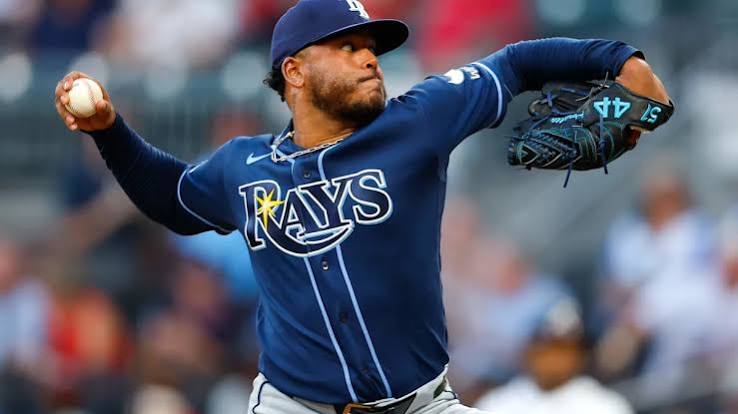
Freddy Peralta’s 2026 season looked like it was heading in the wrong direction. The right-hander had struggled with the New York Mets, his performance had become a concern, and by the time the trade deadline arrived, his future was no longer in New York.
Then the Tampa Bay Rays made their move.
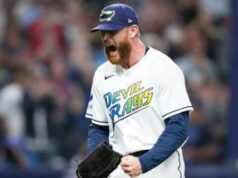
Peralta was traded to Tampa Bay on August 2, and what followed has become one of baseball’s most remarkable late-season turnarounds. The pitcher who carried a 4.99 ERA in 22 starts for the Mets finished the regular season with a 3.25 ERA across his final 10 outings with the Rays.
Now he has gone even further.
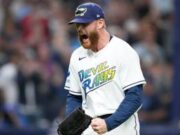
Peralta helped Tampa Bay defeat the Cleveland Guardians in the American League Championship Series, earning MVP honors after delivering dominant performances as both a starter and a reliever. The Rays are heading to the World Series, and Peralta has become one of the biggest reasons why.
For the Mets, the story is uncomfortable. They traded a pitcher who was struggling, and he immediately became a postseason hero somewhere else.
But this is not simply a story about New York making a mistake. It is about how Tampa Bay helped a talented pitcher rediscover what made him dangerous in the first place—and whether the Mets missed an opportunity to do the same.
The Mets Got a Struggling Pitcher. The Rays Got a Different Freddy Peralta.
Peralta arrived in Tampa Bay with plenty to prove.
His first half with the Mets had been difficult. A 4.99 ERA over 22 starts was not the kind of production New York needed from a starting pitcher, particularly while trying to remain competitive.
The Rays saw an opportunity.
Tampa Bay acquired Peralta in exchange for three minor-league prospects: Aidan Smith, Gary Gill Hill and Émilien Pitre. The deal gave the Mets future talent while allowing the Rays to strengthen their rotation for the stretch run.
At the time, it was a reasonable baseball decision for both teams.
The Mets were moving a struggling veteran and receiving prospects. Tampa Bay was taking a chance on a pitcher whose previous track record suggested he could be much better than his recent numbers.
What makes the trade interesting is how quickly that gamble paid off.
Peralta did not need an entire offseason to rebuild his confidence. He needed a new environment, adjustments to his approach and an opportunity to pitch meaningful games.
The Rays provided all three.
Tampa Bay Didn’t Just Give Peralta a New Uniform
The turnaround was not simply a matter of changing teams and hoping for the best.
Peralta’s success in Tampa Bay was connected to adjustments in his pitching approach and mechanics. Reports on the Rays’ work with him point to changes involving his stance, delivery speed and pitch selection, including a return to pitching from the stretch more consistently.
The fastball remained a major weapon.
In the postseason, Peralta’s velocity became particularly important. He was able to attack hitters aggressively, get ahead in counts and use his secondary pitches to keep opponents from sitting comfortably on the fastball.
That matters because a pitcher who is struggling often loses confidence in his best pitch. He begins trying to be too careful, falls behind in counts and gives hitters more opportunities to attack.
Tampa Bay helped Peralta return to a more aggressive style.
The results were immediate enough to change the conversation around his season. Instead of being remembered as a disappointing Mets acquisition, Peralta became a key part of a Rays team that kept winning when the pressure increased.
That is the difference between simply acquiring talent and helping that talent perform.
Peralta’s ALCS Was the Ultimate Answer to His Doubters
The American League Championship Series was where Peralta’s turnaround became impossible to ignore.
He delivered six scoreless innings in Tampa Bay’s Game 2 victory over Cleveland, giving the Rays a crucial response after losing the series opener.
Then came Game 4.
Peralta was called out of the bullpen to record two important outs after Nick Martinez’s start ended. It was an unusual assignment for a pitcher who had spent most of his career starting games, but he accepted the role and helped Tampa Bay protect its lead.
By Game 6, he was back in the rotation with the chance to send the Rays to the World Series.
Peralta delivered again.
He pitched 5⅓ innings, allowed one run and struck out three as Tampa Bay defeated Cleveland 7–3. The performance helped secure the ALCS MVP award and confirmed that the Rays’ trade deadline gamble had turned into a postseason success.
Across his three ALCS appearances, Peralta recorded a 0.75 ERA over 12 innings.
That is not just a hot streak. It is a dominant postseason contribution from a player who had been struggling months earlier.
Did the Mets Give Up on Peralta Too Soon?
This is the question New York fans will be asking.
The Mets traded Peralta because his performance had not met expectations. There is nothing unreasonable about trying to improve a roster while acquiring prospects who could help the organization in the future.
But the Rays’ success raises a difficult issue: could New York have helped Peralta make these adjustments before deciding to move him?
It is impossible to know from the outside.
The Mets may have tried changes that did not work. Peralta may have needed a different coaching environment or a fresh start. Tampa Bay may simply have been the right destination at the right time.
That is why this should not be treated as proof that the Mets made an obviously terrible trade.
The more meaningful question is whether the Rays have identified something in Peralta’s game that New York could not unlock.
If Tampa Bay’s adjustments prove sustainable, the trade will become a useful case study in how organizations evaluate and develop pitching talent.
And if Peralta continues to dominate, the Mets will have to live with the fact that a pitcher they moved became one of the biggest postseason stories of the year.
The World Series Adds Another Twist to Peralta’s Story
Peralta’s next challenge is personal as well as professional.
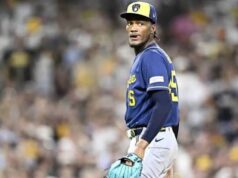
The Rays are preparing to face the Milwaukee Brewers in the World Series—the organization where Peralta spent much of his career before being traded to New York in January.
Milwaukee gave Peralta his opportunity to become an established major-league starter. Now he could find himself pitching against the team that helped build his reputation.
That creates a fascinating matchup.
The Brewers know Peralta’s strengths, his fastball and the way he attacks hitters. They have seen him in practice, in games and across multiple seasons.
But Peralta also knows Milwaukee.
He understands the organization’s hitters and the expectations that come with playing for a team trying to win its first World Series championship.
The question is whether the pitcher Tampa Bay has helped revive can use that familiarity to his advantage—or whether Milwaukee’s knowledge of him will create a different kind of challenge.
SportsLoud’s Take: Tampa Bay Deserves Credit, but Peralta Deserves More
The easiest version of this story is that the Mets made a mistake and the Rays got lucky.
That is too simple.
Tampa Bay deserves credit for recognizing that Peralta’s poor first half did not necessarily mean his best pitching was gone. The organization made adjustments, gave him an important role and helped him regain the confidence to attack hitters.
But Peralta also deserves recognition for doing the work.
A pitching coach can suggest changes. A new team can offer opportunities. Neither can throw the baseball for the player.
Peralta responded when the stakes were highest, including accepting a relief assignment and delivering in the ALCS clincher.
The Mets’ trade may eventually be judged as a mistake, especially if Peralta wins a championship with Tampa Bay. But the larger lesson is that struggling players are not always finished products.
Sometimes they need a different approach. Sometimes they need a different environment. And sometimes a team is willing to take a chance that another organization no longer wants to make.
Freddy Peralta’s season has become a reminder that a player’s story can change quickly in baseball.
The Mets saw a struggling pitcher. The Rays saw a chance to rebuild a contender’s rotation. Now Peralta is an ALCS MVP, a World Series starter candidate and a reminder that the trade deadline can change more than a team’s roster.
It can change a player’s entire season.