












Kylian Mbappé has spent years being described as one of the players destined to rule world football. He has the speed to leave defenders behind, the finishing to punish the smallest mistake and the confidence to demand responsibility when the pressure is at its highest.
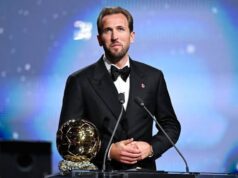
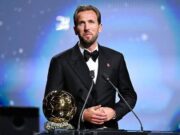
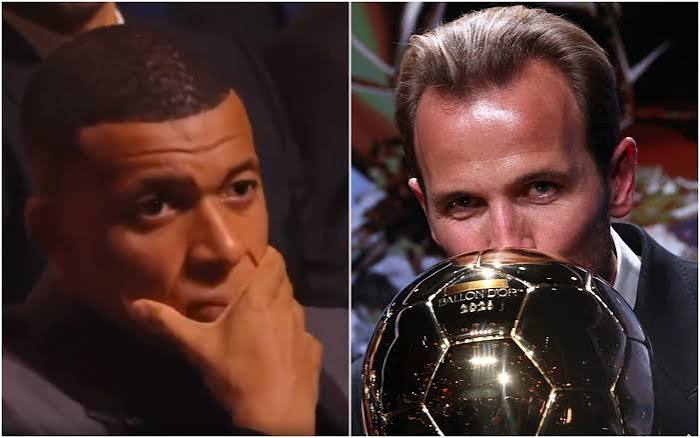
Yet when the 2026 Ballon d’Or winner was announced in London, Mbappé was left watching Harry Kane lift the trophy.
For Mbappé, finishing second is not a disaster. Plenty of legendary footballers have produced remarkable careers without winning the award. But this particular result raises an uncomfortable question: if a player scores 58 goals in 60 matches, leads the scoring charts in La Liga and the Champions League, and still finishes behind another striker, what exactly must he do to win the Ballon d’Or?
Kane had an exceptional season of his own. The Bayern Munich striker scored 73 goals for club and country, helped his team win major domestic honours and captained England at the World Cup. He became the first Englishman to win the men’s award since Michael Owen in 2001. According to UEFA’s official report, Kane also scored 14 goals in the Champions League as Bayern reached the semi-finals.
The numbers make Kane a worthy winner. But they do not erase the strength of Mbappé’s argument.
The debate is not simply about whether Kane deserved the award. It is about whether Mbappé produced a season strong enough to make the final result feel like a missed opportunity.
Mbappé’s Numbers Were Too Good to Ignore
There is a reason Mbappé entered the ceremony among the leading contenders. His production was extraordinary, and he remained one of the most dangerous attacking players in Europe.
According to Le Monde’s analysis of the result, the Real Madrid forward scored 58 goals in 60 matches. He also topped the scoring charts in both La Liga and the Champions League.
Those figures tell a story of consistency. Scoring at that rate requires more than a few spectacular performances or a short burst of form. It requires a player to keep producing across a demanding schedule, against different opponents and under constant scrutiny.
Mbappé is also not a striker who depends on one type of chance. He can attack space behind a defensive line, beat a defender in a one-on-one situation, finish from the left or operate centrally. Opponents must account for his speed before he even receives the ball.
That threat changes how teams defend Real Madrid. Defenders may drop deeper to protect the space behind them, leaving more room for teammates to receive the ball. Others may double up on Mbappé, creating opportunities elsewhere.
His contribution cannot be reduced to a goals tally alone.
And when a player combines that influence with 58 goals in 60 matches, it is understandable that supporters would ask whether the voters gave enough weight to his individual brilliance.
The Problem for Mbappé Was What Real Madrid Failed to Win
Here is where his argument becomes more complicated.
Football’s biggest individual award is not decided by goals alone. Team achievements, performances in important matches and a player’s overall influence all shape the conversation.
Mbappé’s scoring record was outstanding, but Real Madrid did not win a major trophy during the campaign. The club exited the Champions League in the quarter-finals, while France fell in the World Cup semi-finals. Those setbacks weakened the overall case for Mbappé compared with a rival whose goals helped deliver silverware.
That is the uncomfortable reality of individual awards in a team sport.
A forward can do almost everything expected of him and still finish a season without the trophies that strengthen a Ballon d’Or campaign. Meanwhile, another player can combine elite numbers with a successful season for his club and country.
That does not necessarily mean the second player is individually superior in every respect. It means his achievements fit the award’s criteria more convincingly.
Mbappé should not be blamed for every failure around him. Football is a team sport, and even the greatest attackers cannot control every defensive mistake, tactical decision or missed opportunity.
But the Ballon d’Or rewards the season as a whole. When the trophy cabinet is empty, the argument becomes harder.
Mbappé had the goals. Kane had the goals and the stronger collection of team achievements.
That distinction may have decided the race.
Kane Did Not Steal the Award From an Unworthy Rival
Some supporters will argue that Mbappé was robbed. Others will say Kane was the obvious winner. The truth is more interesting than either extreme.
Kane’s season was not built on reputation. His 73 goals for club and country, his contribution to Bayern’s domestic success and his Champions League production made him a serious contender on merit. He also led England at the World Cup, giving voters another important part of his season to consider.
His style is different from Mbappé’s, but that does not make it less valuable.
Kane is a centre-forward who can finish moves, link play and create opportunities for teammates. His ability to drop into deeper positions helps connect midfield with attack, while his finishing makes him dangerous inside the penalty area.
Mbappé can change a game with explosive runs and individual skill. Kane can control an attack through movement, passing and clinical finishing.
There is no single formula for greatness.
If voters prioritised total output, team success and contribution across the campaign, Kane’s victory is understandable. The fact that Mbappé finished second does not mean his season was ignored. It means Kane’s overall case was judged stronger.
The real disagreement is about how much weight should be placed on individual statistics when team achievements point in another direction.
Is the Ballon d’Or Becoming Too Dependent on Trophies?
This is the question worth debating beyond the names of the two players.
If a footballer scores at an extraordinary rate but fails to win the biggest trophies, should that significantly reduce his chances of winning the Ballon d’Or?
There is a strong argument on both sides.
Those who prioritise individual performance can reasonably argue that a player should not be punished too heavily for the shortcomings of his teammates. A striker cannot score every goal, defend every attack and make every tactical decision. His job is to influence matches, and Mbappé did that repeatedly.
On the other hand, football is ultimately about winning. A player’s influence becomes even more meaningful when it helps his team deliver championships and progress through the most demanding competitions. Kane’s season combined personal excellence with that kind of success.
The challenge is finding the right balance.
If trophies become the deciding factor every time, outstanding players in unsuccessful teams could struggle to win the award even when their individual performances are exceptional. But if statistics alone determine the winner, the wider impact of a player’s season may be overlooked.
The Ballon d’Or is supposed to recognise the best player of the season, not simply the highest scorer or the player with the most medals.
That leaves room for disagreement—and perhaps it should.
Mbappé Must Turn His Next Great Season Into a Winning One
The danger for Mbappé is that another second-place finish could become part of the narrative surrounding his career.
He has already established himself as one of the world’s leading players. His goalscoring record, major tournament experience and ability to perform on the biggest stages are not in question.
But the Ballon d’Or remains one of the few prizes missing from his individual collection.
His next challenge is not simply to score more goals. It is to help Real Madrid convert those goals into the achievements that strengthen his case when the voting begins again.
That means delivering decisive performances in the Champions League, helping his club compete for major honours and making the difference when the season reaches its most important moments.
It is not entirely within his control. Teammates must perform, managers must make the right decisions and injuries can change a campaign. But Mbappé can continue to put himself in the strongest possible position.
At his best, he has the ability to define an era. One award result does not change that.
Still, the next chapter will matter. If Mbappé combines another extraordinary scoring season with major trophies, the argument in his favour could become much harder to dismiss.
The SportsLoud Verdict: Mbappé Had a Case, but Kane Had the Complete Season
Should Kylian Mbappé have won the 2026 Ballon d’Or?
He had a legitimate case, but I would not call Kane’s victory a robbery.
Mbappé’s 58 goals in 60 matches were outstanding, and his scoring achievements in La Liga and the Champions League made him a serious contender. His second-place finish should not hide the scale of his individual season.
But Kane’s 73 goals, domestic success with Bayern and performances across the campaign gave him a more complete case. The award is about more than identifying the most explosive player or comparing two goal tallies.
Kane won because his individual production came alongside the kind of team success that strengthens a Ballon d’Or campaign.
That does not make Mbappé’s season any less impressive. It simply explains why an extraordinary scoring record was not enough this time.
The next time these two players compete for the award, the debate could look very different. Mbappé has the talent and scoring ability to win it. What he needs is a season in which his personal brilliance and his team’s achievements tell the same story.
For now, Kane has the trophy, Mbappé has the argument, and football fans have a debate that will continue long after the ceremony.
So let us settle one thing: would you rather have Mbappé’s explosive individual brilliance or Kane’s combination of goals and trophies over a full season?