






















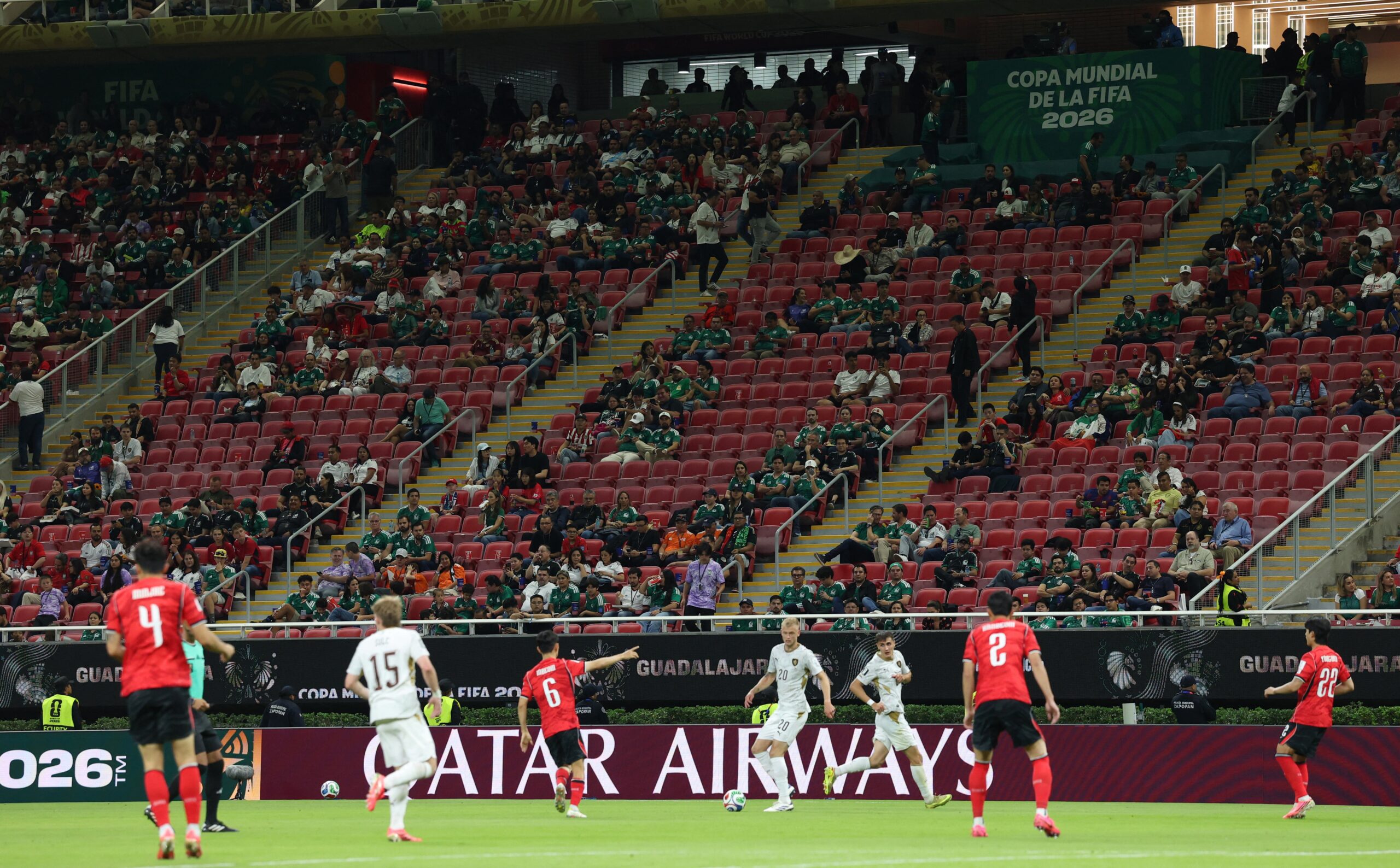
The 2026 FIFA World Cup has delivered drama on the pitch—but one of the biggest stories isn’t about goals or upsets. It’s about thousands of empty seats.
South Korea’s thrilling 2-1 comeback victory over Czechia should have been the headline. Instead, television cameras repeatedly showed noticeable patches of empty seats inside Guadalajara’s stadium, leaving fans around the world asking one question: How can football’s biggest tournament have empty seats?
The controversy has reignited criticism of FIFA’s ticket pricing strategy. Despite FIFA announcing an official attendance of nearly 45,000 spectators, the visible gaps throughout the stadium sparked widespread backlash on social media, with many supporters claiming ticket prices have become too expensive for everyday fans.
Across X, Reddit, and football forums, supporters accused FIFA of turning the World Cup into a luxury event rather than a tournament for the people. Others questioned dynamic pricing and resale policies, arguing that many local fans simply cannot afford to attend.
FIFA President Gianni Infantino defended the pricing model, insisting demand has exceeded expectations and comparing World Cup ticket prices to those of other major sporting events. But the images from Guadalajara have fueled a debate that is unlikely to disappear anytime soon.
Ironically, the football itself has been outstanding. Mexico thrilled home fans in the tournament opener, Raúl Jiménez completed an emotional comeback story by scoring for El Tri, and South Korea produced one of the first comeback victories of the competition. Yet off the field, conversations continue to focus on whether football’s biggest celebration is becoming too expensive for the supporters who made it the world’s most popular sport.
As the World Cup moves into its next round of matches, FIFA faces a growing challenge—not just delivering unforgettable football, but ensuring the stands are as full as the passion the tournament is supposed to represent.