
















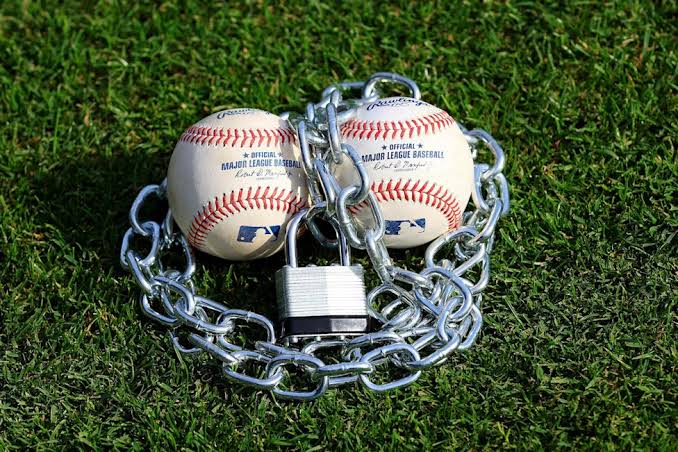
Major League Baseball could be heading toward another ugly labor battle.
With the current collective bargaining agreement set to expire on December 1, 2026, MLB owners and the players’ union have some serious issues to work through — and the biggest one might be the salary cap.
MLB wants one.
The players don’t.
And that disagreement could have major consequences for the 2027 season.
💰 MLB Wants a Salary Cap
Under the league’s proposal, MLB would introduce a hard salary cap of $245.3 million for 2027.
But there’s another important part of the proposal: a $171.2 million salary floor.
That means teams wouldn’t simply be able to spend whatever they wanted. Clubs would have to stay under the cap while also spending at least the minimum amount.
MLB says the goal is competitive balance.
The league believes the enormous difference in spending between baseball’s richest and poorest teams makes it harder for smaller-market clubs to compete.
And it’s difficult to ignore the numbers.
The Los Angeles Dodgers had a player payroll of roughly $345 million last season, while also paying $169 million in luxury-tax penalties.
That’s exactly the type of spending gap MLB wants to address.
🚨 The Players Are NOT Having It
Here’s where things get spicy.
The MLB Players Association has repeatedly said it will not agree to a salary-cap system.
Instead, the union has proposed a different approach that would penalize teams that spend too little rather than placing a hard limit on teams that spend too much.
From the players’ perspective, a salary cap could limit how much teams are willing to pay their stars.
And that’s a major concern.
Imagine a superstar entering free agency and several teams having the money to make huge offers — only for the cap to prevent them from going beyond a certain point.
Players don’t want that.
👀 The Dodgers Are a BIG Part of This
The Dodgers have become one of the biggest examples in the salary-cap debate.
Los Angeles has consistently shown that it is willing to spend enormous amounts of money to build a championship roster.
And it’s worked.
The Dodgers are the two-time defending World Series champions, according to Manfred’s comments reported by Reuters.
MLB’s argument is that teams with enormous financial advantages can create a competitive imbalance.
The players’ side sees things differently.
If an owner has the money to spend, why should that owner be prevented from spending it?
That’s the argument that’s going to make these negotiations extremely difficult.
⚠️ Could There Actually Be a Lockout?
Unfortunately, yes.
If MLB and the MLBPA don’t reach a new agreement before the current CBA expires, an owner-imposed lockout is widely expected to be a possibility.
That’s the part baseball fans should pay attention to.
A lockout wouldn’t necessarily mean the entire 2027 season disappears.
But the longer a labor dispute lasts, the more nervous fans, players and teams will become.
And baseball has been here before.
The last MLB season-ending work stoppage came during the infamous 1994-95 strike, when the World Series was canceled.
Nobody wants to see baseball go down that road again.
🤔 So Who Blinks First?
That’s the million-dollar question.
MLB Commissioner Rob Manfred is sounding optimistic.
He recently said the league is meeting regularly with the players and that the goal is to reach a deal and play baseball in 2027.
But optimism doesn’t mean the difficult issues are solved.
The salary cap is only one part of the negotiations. Service time, the international draft and television revenue are also among the issues on the table.
There’s still plenty of time before December.
But there’s also plenty of room for things to get ugly.
🏆 The Bottom Line
MLB doesn’t have a salary cap right now.
The owners want one.
The players don’t.
And with the CBA expiring in December, baseball could be heading toward one of its most important labor battles in decades.
Would a salary cap actually make MLB more competitive — or would it just stop teams from paying their biggest stars?
That’s the debate.
And baseball fans are going to have plenty to say about it.