






















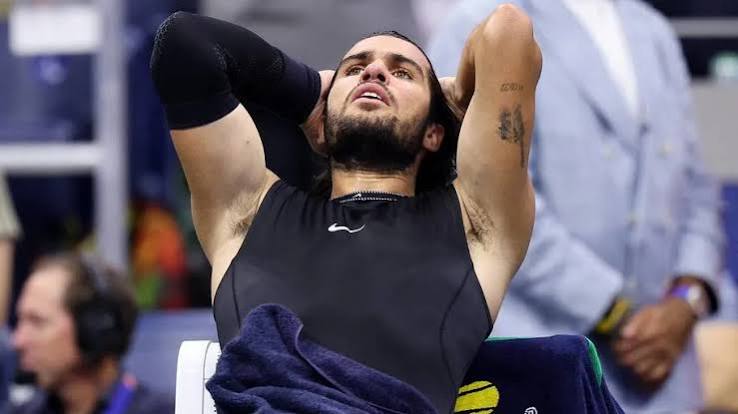
Carlos Alcaraz arrived at the Shanghai Masters looking like a player ready to take control of the tennis conversation again. He had just defended his Japan Open title, put together a seven-match winning streak, and appeared to be finding his rhythm after missing months of the season with a wrist injury.
Then Zizou Bergs changed the story.
The unseeded Belgian stunned the second seed 7–5, 7–6(4) in the Shanghai third round on October 12, handing Alcaraz a defeat that few fans expected. Bergs did more than survive a match against one of the biggest names in tennis. He played with the confidence and composure needed to take advantage of a superstar who could not find his best level when it mattered.
For Alcaraz, the loss raises an uncomfortable question: Is this simply one frustrating afternoon, or is his comeback still missing something important?
The result alone does not prove that his wrist is causing problems again. Alcaraz pointed to his mistakes and his difficulty finding a good position on the return. But after such a long injury layoff, every disappointing performance is likely to attract extra attention.
And with the season moving toward its final major tournaments, Alcaraz has limited time to turn that attention back toward his tennis.
From Tokyo Champion to Shanghai Casualty
The timing of the defeat made it particularly surprising.
Alcaraz entered Shanghai fresh from defending his Japan Open title. His recent results suggested that the 23-year-old was recovering his competitive edge after spending approximately four and a half months sidelined by a wrist injury.
His comeback had not been perfect, but it had produced encouraging signs. He reached the US Open quarter-finals after returning to competition and subsequently collected more wins as his Asian swing gathered momentum.
That is why Bergs’ victory matters. Alcaraz was not arriving in Shanghai after a string of terrible performances. He was arriving with confidence, a recent title, and expectations that he could make a serious run at a tournament he had yet to win.
Instead, the Spaniard struggled to establish control.
Bergs won the first set 7–5 before holding his nerve in the second-set tiebreak to close out the match 7–6(4). The contest lasted just over two hours, and the Belgian repeatedly disrupted Alcaraz’s rhythm.
For a player accustomed to dictating rallies with explosive movement, creative shot-making and aggressive changes of direction, that lack of control was costly.
The defeat also ended Alcaraz’s seven-match winning streak. It was a reminder that recent success does not guarantee another comfortable victory, especially when an opponent executes a clear game plan.
The Wrist Question Is Back — But Don’t Jump to Conclusions
Any discussion about Alcaraz’s current form will inevitably return to his wrist.
The injury kept him away from competition for a significant portion of the 2026 season. When a player misses that much time, returning to matches is only part of the challenge. Building consistency, regaining confidence under pressure and trusting every shot can take longer.
However, it would be unfair to label the Shanghai loss an injury setback without evidence that the wrist was responsible.
Alcaraz’s own assessment focused on his performance. He acknowledged making too many mistakes, struggling to find a good position on the return and feeling uncomfortable with his shots. He also praised Bergs for serving well.
That distinction matters.
A player can struggle after an injury without every poor result being caused by the injury itself. Match sharpness, court conditions, decision-making and an opponent’s quality can all influence the outcome.
The more useful question is whether Alcaraz’s next performances reveal a pattern.
If his timing, shot selection and movement continue to look uncomfortable, the conversation about his recovery will become more serious. If he responds with cleaner tennis and stronger results, Shanghai may end up being remembered as a frustrating detour rather than a major warning.
For now, the evidence supports concern about his performance, not a conclusion that his wrist has deteriorated.
Zizou Bergs Deserves More Than a Footnote
Alcaraz’s struggles explain part of the upset, but they should not overshadow Bergs’ achievement.
Ranked outside the top 30 at the time of the match, the Belgian faced a player with seven Grand Slam titles and a reputation for turning difficult matches into highlight reels. Bergs had lost their previous meeting in Tokyo in 2025, yet he showed no sign of being intimidated by the occasion.
He broke Alcaraz’s serve three times and made the most of important moments. His aggressive approach prevented the Spaniard from settling comfortably into rallies, while his serving helped him protect his advantage.
That is how dangerous lower-ranked players can become when they combine a clear tactical plan with the confidence to execute it.
Bergs did not need to outshine Alcaraz in every exchange. He needed to make the Spaniard uncomfortable, keep believing in his opportunities and avoid handing the favourite easy openings.
He accomplished those objectives.
The victory was the biggest of Bergs’ career by ranking, and it could become an important confidence boost for a player trying to establish himself against the sport’s elite.
The next challenge is turning one memorable upset into a sustained run. Beating Alcaraz can change how opponents view Bergs, but he must continue delivering performances like this to make that new reputation last.
Alcaraz’s Biggest Problem May Be Consistency, Not Talent
Nobody needs to question Alcaraz’s talent after one defeat. His ability to create winners, defend under pressure and change the direction of a rally remains among the most exciting in men’s tennis.
The more relevant issue is consistency.
When Alcaraz is playing well, he can make opponents feel as though they must produce extraordinary tennis simply to stay in a match. But when his timing slips and unforced errors accumulate, he can give opponents opportunities that would normally be difficult to find.
That was the opening Bergs exploited in Shanghai.
The challenge after an extended injury absence is to return not just to a high level, but to make that level dependable. Winning a tournament is an encouraging milestone. Repeating strong performances against different opponents, on different days and under different conditions is a tougher test.
Alcaraz’s recent results remain encouraging overall. His loss in Shanghai came after a title-winning week in Tokyo, not after a complete collapse in form.
That is why one defeat should not erase the progress he has made. But it should give him and his team useful footage to study.
They will need to identify why his return positioning failed, where the unforced errors came from and how opponents can disrupt his rhythm. Those answers are more valuable than simply calling the defeat a shock.
What Happens Next Could Decide the Story
The immediate danger for Alcaraz is allowing one poor performance to become a bigger confidence problem.
Elite players do not avoid bad days. They separate themselves by how quickly they understand what went wrong and how effectively they respond.
Alcaraz has time to regroup before the final stretch of the season, with the Paris Masters in November among the next major opportunities on his schedule. He can use the break to review the Shanghai match with his coaching team and work on the areas that caused trouble.
He does not need to reinvent his game. He needs to restore the reliability that allows his best weapons to work consistently.
For fans, the next tournament will be revealing. Does he return with sharper returning, better shot selection and more control in important points? Or do the same problems appear again?
That will tell us more about his comeback than the Shanghai scoreline alone.
SportsLoud Prediction: Don’t Write Alcaraz Off Yet
The temptation after a result like this is to declare that Alcaraz is not fully recovered or that his momentum has disappeared. That would be an overreaction.
Bergs earned this victory, and Alcaraz clearly had a poor day. But the Spaniard had also won the Japan Open immediately before Shanghai and was building a strong record since returning from injury.
Our prediction: Alcaraz will bounce back, but his next few matches will matter more than usual.
If he returns to his best level, this defeat will become a useful lesson in a demanding season. If the same technical problems persist, opponents will have a clearer blueprint for challenging him, and questions about his post-injury consistency will grow louder.
The wrist remains part of the bigger picture because of the time he missed, but it should not become the automatic explanation for every setback.
For now, Bergs deserves the headlines, and Alcaraz deserves the chance to respond.
The real test is no longer whether Alcaraz can win another title. It is whether he can turn his comeback into a sustained run of elite tennis before the season ends.
SportsLoud question: Was this just a bad day for Carlos Alcaraz, or should tennis fans be concerned about his consistency after the wrist injury? Share your take.