





















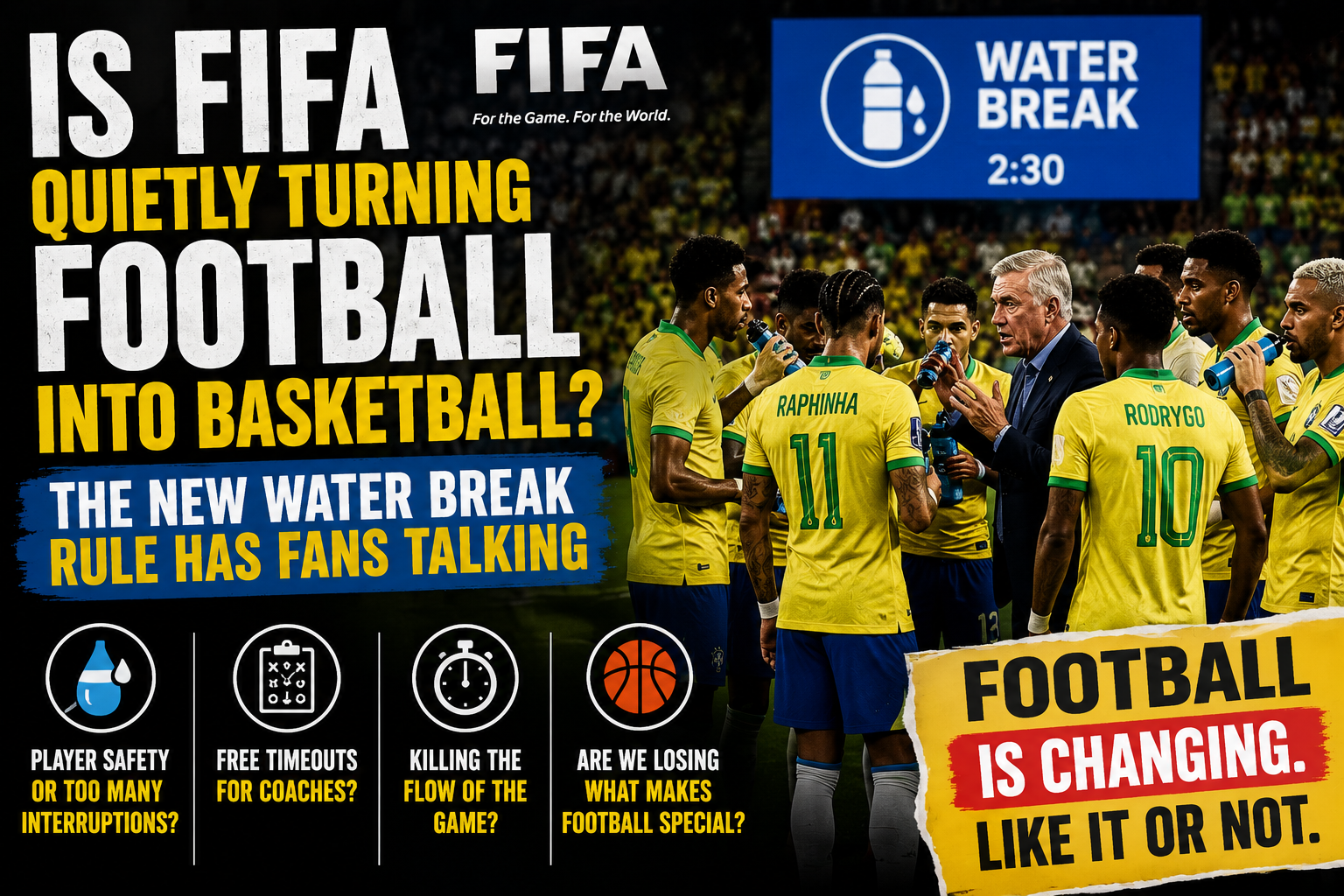
The 2026 FIFA World Cup has already delivered stunning upsets, emotional comeback stories, and unforgettable goals. But one of the biggest talking points isn’t about what’s happening with the ball—it’s about what happens when the game suddenly stops.
FIFA’s decision to introduce mandatory water breaks during matches played in extreme heat has ignited a fierce debate among football fans. While the rule is designed to protect players from dangerous temperatures, many supporters believe it’s also changing the very rhythm of the sport.
The criticism isn’t about hydration—it’s about strategy.
Unlike traditional stoppages, water breaks effectively give managers a free timeout. Coaches can gather their players, make tactical adjustments, reorganize formations, and slow the momentum of an opponent that may have been dominating the game. To some fans, it feels strikingly similar to the timeout culture seen in basketball and American football.
Supporters took to social media throughout the opening round of World Cup matches, with many arguing that these interruptions are beginning to alter football’s natural flow. Some praised FIFA for prioritizing player welfare in scorching North American conditions, while others questioned whether the governing body is gradually introducing changes that make football less continuous and more tactical.
Of course, player safety remains the priority. With several host cities experiencing temperatures well above 30°C (86°F), the risk of heat-related illness is real, and medical experts have long supported cooling breaks under such conditions.
Still, the debate raises an interesting question: Where is the line between protecting players and changing the sport?
Football has always been celebrated for its uninterrupted drama. Momentum can shift in seconds, relentless pressure can force mistakes, and tired legs often produce unforgettable moments late in matches. Critics argue that scheduled cooling breaks can interrupt those dynamics, giving struggling teams a chance to regroup when they otherwise might not have had one.
Others see it differently. They argue that football has evolved before—with goal-line technology, VAR, and five substitutions—and that protecting players from extreme heat should never be controversial.
As the tournament continues, one thing is certain: the discussion isn’t going away. Every time the referee blows the whistle for a water break, fans will continue asking the same question:
Is this simply smart player protection, or is FIFA quietly reshaping the world’s most popular sport?