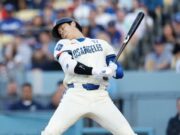













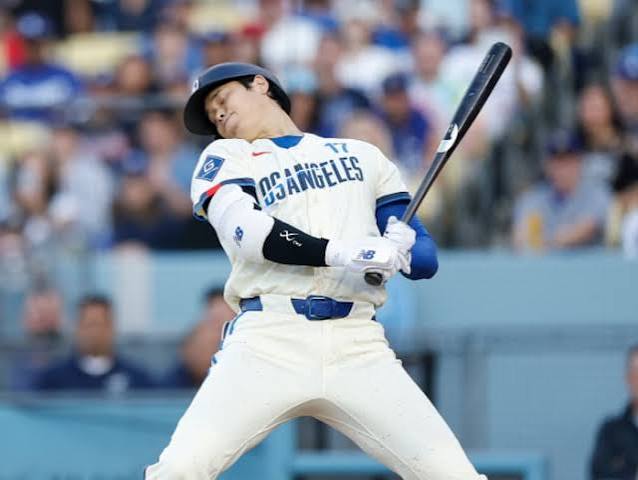
The Los Angeles Dodgers built a team capable of winning championships, but even the biggest payrolls and brightest superstars cannot guarantee October success. Now, with their season hanging in the balance, the Dodgers are facing a problem nobody wanted to see: Shohei Ohtani cannot seem to find his swing.
Los Angeles enters Game 3 of the National League Championship Series trailing the Milwaukee Brewers 2–0. After losing the opening game 2–1 and falling 7–4 in Game 2, the Dodgers return home knowing that another defeat would put them three losses away from elimination. <Cite refs={[“turn121221search2″,”turn121221search1”]}/>
Ohtani, meanwhile, has managed just three hits in 20 postseason at-bats. All three have been singles, and he has struck out seven times. The struggles have become serious enough that manager Dave Roberts has moved the superstar down to sixth in the batting order for Game 3. It is the first time Ohtani has hit that low in a lineup since 2020. <Cite refs={[“turn121221news24″,”turn121221news27”]}/>
For a player who has repeatedly looked capable of changing a game with one swing, this is an uncomfortable moment. But before declaring the Dodgers finished, there is a bigger issue to examine: Is Ohtani’s slump the reason Los Angeles is in danger, or is his slump exposing problems throughout the team?
The Superstar Who Has Suddenly Lost His Biggest Weapon
Ohtani’s value to the Dodgers comes from his ability to put opposing pitchers under pressure. A walk can create a scoring opportunity. A double can change an inning. A home run can turn a close game into a celebration.
That threat has been missing for weeks.
According to MLB.com, Ohtani’s last home run came on August 18, and his recent offensive decline began before the postseason. His difficulties continued through the National League Division Series against Atlanta and into the first two games against Milwaukee. <Cite refs={[“turn121221search1″,”turn121221search0”]}/>
The timing could hardly be worse. In October, teams do not have the luxury of waiting several weeks for a hitter to rediscover his form. Every at-bat matters, and opponents are quick to exploit weaknesses.
When Ohtani is dangerous, pitchers must carefully manage how they attack him. When he is struggling, they can challenge him differently and focus on limiting the damage from the rest of the lineup.
That is the trap facing Los Angeles. The Dodgers do not necessarily need Ohtani to hit a home run every night. They need him to become a threat again—someone who forces Milwaukee to think twice before throwing a strike.
Until that happens, the Brewers can approach the matchup with greater confidence.
His Bat Is Not the Only Thing the Dodgers Must Worry About
It would be easy to describe this as a simple case of a great player having a bad postseason. However, Ohtani has also been dealing with lingering problems involving his right biceps and left knee. Those issues have affected his season, and he spent time on the injured list in September. <Cite refs={[“turn121221search1″,”turn121221news28”]}/>
That context matters.
A player can be cleared to compete without being at his best. Timing, balance and confidence at the plate can all be affected when a hitter is managing physical discomfort. Still, it would be unfair to claim that the injuries alone explain every missed opportunity. Neither fans nor outside observers can know precisely how much they are affecting each swing.
Ohtani has also made it clear that he does not want to use his condition as an excuse for his performance, according to reporting on his comments before Game 3. <Cite refs={[“turn121221news25″,”turn121221news24”]}/>
The Dodgers now face a difficult balancing act. They need his bat, but they also need to consider whether continuing to play him in his current condition gives the team the best chance to survive.
Moving him to sixth is a significant adjustment, but it is not necessarily a declaration that the team has lost faith in him. It may be an attempt to reduce the immediate pressure while allowing other hitters to take on more responsibility.
The real question is whether that adjustment comes soon enough.
Milwaukee Is Showing Why a Star-Studded Roster Is Not Enough
The Brewers deserve credit for putting the Dodgers in this position. They have taken the first two games and are now two wins away from advancing to the World Series. Their 7–4 victory in Game 2 gave them a valuable cushion heading to Los Angeles. <Cite refs={[“turn121221search2″,”turn121221news9”]}/>
Milwaukee does not need to defeat Ohtani in a headline-grabbing individual battle. It needs to keep the Dodgers from building momentum, execute in important situations and force the rest of the lineup to deliver.
That is what makes this series dangerous for Los Angeles. A postseason opponent does not have to possess the most famous roster to win. It needs to play better baseball over the games that matter.
The Dodgers have the names and championship experience to respond. But reputations do not score runs, and previous achievements cannot erase a 2–0 series deficit.
If Milwaukee keeps the pressure on, the Dodgers could find themselves chasing the game rather than dictating it. That would put even more attention on Ohtani, creating a cycle in which every unsuccessful at-bat becomes a bigger story.
For the Brewers, the assignment is straightforward: do not let Los Angeles find its rhythm.
Why Blaming Ohtani Alone Misses the Bigger Story
Ohtani’s slump is the obvious headline, but a championship team cannot depend on one hitter to rescue every difficult situation.
Los Angeles has other accomplished hitters, including Freddie Freeman and Will Smith. Their contributions matter just as much when the team is trying to recover from a series deficit. Other parts of the lineup must create scoring opportunities, move runners and punish Milwaukee when its pitchers make mistakes.
The Dodgers’ offensive difficulties have extended beyond Ohtani. MLB.com reported that Los Angeles went 1-for-6 with runners in scoring position in Game 1, evidence that the team’s problems were not limited to one superstar. <Cite refs={[“turn121221news10″,”turn121221search0”]}/>
That is an important distinction. Even if Ohtani starts hitting again, the Dodgers cannot assume the series will suddenly turn around. They need more consistent production across the lineup.
There is also a strategic issue. When the top of the order is not generating enough pressure, the opposition can settle into a more comfortable pitching plan. By moving Ohtani to sixth, Roberts has changed the lineup in an effort to find a better combination.
But a new batting order is only a starting point. The players must still execute.
If Freeman, Smith and the rest of the Dodgers’ hitters fail to capitalize on opportunities, the team could lose even if Ohtani finally records a big hit.
Can Ohtani Repeat Last Year’s October Magic?
There is a reason Dodgers fans have not completely given up hope.
During the 2025 NLCS against Milwaukee, Ohtani endured a difficult stretch before producing an extraordinary Game 4 performance. He hit three home runs and struck out 10 batters over six scoreless innings as the Dodgers completed a sweep of the Brewers. <Cite refs={[“turn121221search0″,”turn121221news12”]}/>
That performance remains a reminder of his extraordinary ceiling. Ohtani has shown that he can change a postseason series in a single night.
However, history should provide hope, not an excuse to ignore the present situation. Last year’s breakthrough does not guarantee that the same thing will happen again. This time, the Dodgers are facing a different set of circumstances, including his current physical concerns and a Milwaukee team that already has a 2–0 advantage.
A comeback would begin with something simple: a quality at-bat.
Ohtani does not need to hit three home runs to change the mood. A well-timed single, a disciplined walk or a hard-hit ball could help rebuild his confidence and force Milwaukee to respect him again.
The challenge is turning those small signs into sustained production.
SportsLoud’s Verdict: The Dodgers Are in Trouble, but They Are Not Finished
The next game is a major test for both Ohtani and the Dodgers. Los Angeles needs to win Game 3 to cut Milwaukee’s lead to 2–1 and keep the series within reach. Another loss would leave the team facing a 3–0 deficit, a position from which a comeback would be exceptionally difficult.
My prediction is that the Dodgers still have enough talent and experience to make this a competitive series, but their margin for error is almost gone. Ohtani’s slump makes the challenge harder, yet it would be a mistake to treat him as the only solution—or the only problem.
The biggest sign of hope would be a complete offensive response. If the Dodgers get meaningful contributions from several hitters, they can reduce the pressure on Ohtani and make Milwaukee defend every inning.
If the entire lineup continues to struggle, changing Ohtani’s place in the batting order will not be enough.
For Ohtani personally, this is a chance to remind everyone why he remains one of baseball’s most influential players. For the Dodgers, it is a test of whether their championship ambitions can survive when their biggest star is not performing at his usual level.
The real danger is not simply that Shohei Ohtani has gone cold. It is that the Dodgers may run out of October before the whole team finds its heat.