





















Writing
Eight Sacks Later, Is the Deshaun Watson Comeback Already Falling Apart?
For three straight games, Deshaun Watson had given Cleveland Browns fans reasons to believe that his season might finally be turning around. The fourth-quarter comebacks were coming, the wins were adding up, and the conversation around the quarterback was beginning to change.
Then the New York Jets arrived.
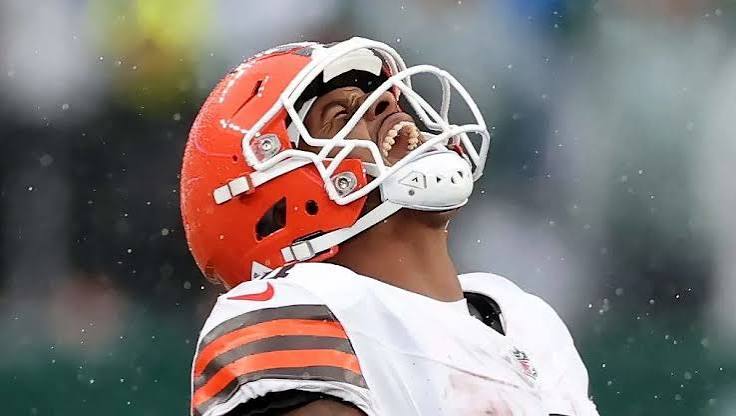
On Sunday, October 11, the Browns suffered a frustrating 17–12 defeat at MetLife Stadium, ending their three-game winning streak. Watson was sacked eight times, Cleveland struggled to sustain drives, and a disastrous special-teams mistake helped turn a late lead into another painful loss. The Browns finished with just 197 net yards, according to the team’s official recap.
The result immediately raised a difficult question: Was Watson’s recent resurgence real, or were the Browns’ comeback victories hiding an offense that still has serious problems?
The answer is more complicated than the final score suggests. Watson was under relentless pressure, but the quarterback also had opportunities to respond. Cleveland’s offensive line, play-calling, running game, and special teams all deserve scrutiny.
For a team that had started building momentum, this was more than a disappointing afternoon. It was a reminder that winning close games can conceal problems that eventually become impossible to ignore.
Eight Sacks Turned Cleveland’s Promising Afternoon Into a Nightmare
The most alarming number from Sunday’s game was not the final score. It was the eight sacks Watson absorbed.
The Jets repeatedly disrupted Cleveland’s passing game, preventing the quarterback from settling into a rhythm. Rookie defensive end David Bailey recorded three sacks, helping lead a defense that consistently forced the Browns into difficult situations.
Watson finished 15-of-33 passing for 155 yards and one touchdown. Those numbers tell the story of an offense that struggled to create consistent opportunities, even when the defense kept Cleveland close enough to compete.
The pressure also made it difficult for the Browns to establish a balanced attack. When a quarterback is constantly under threat, play-calling becomes more predictable, receivers have less time to develop routes, and drives can collapse before the offense reaches scoring range.
However, assigning all eight sacks to Watson would oversimplify what happened.
An offensive line must protect its quarterback, running backs and tight ends must recognise pressure, and coaches must find ways to help an offense handle an aggressive defensive front.
At the same time, quarterbacks have responsibilities of their own. They must recognise blitzes, understand where pressure is coming from, and know when to throw the ball away rather than take a costly sack.
An Associated Press analysis published by The Washington Post noted that three of Watson’s eight sacks were attributed by Pro Football Focus to offensive-line breakdowns. That suggests the protection problems were real, but they were not the only explanation for Cleveland’s struggles.
The bigger concern is that the Jets found a formula that worked throughout the afternoon.
If other opponents can reproduce that pressure, Cleveland’s offensive problems could continue well beyond one rainy game.
The Comeback Story Has Hit Its First Serious Roadblock
Watson entered the Jets game riding a wave of renewed optimism.
Cleveland had won three consecutive games, and Watson had helped deliver fourth-quarter comebacks in each of those victories. For a quarterback who has faced enormous scrutiny, those performances offered a chance to change the narrative surrounding his season.
But winning close games does not automatically mean an offense has become reliable.
Sometimes a quarterback makes a crucial throw late in the game. Sometimes a defense produces a timely stop. Sometimes a kicker delivers under pressure. Those moments matter, but they can also make a team’s weaknesses less visible.
Against the Jets, Cleveland did not have the same late-game escape.
Watson did throw a 29-yard touchdown pass to rookie receiver Denzel Boston in the fourth quarter, giving the Browns a 12–10 lead with approximately six minutes remaining. That was an important moment because it showed Watson could still make a meaningful play despite the difficult afternoon.
But the Browns could not protect that advantage.
The Jets took control after a botched punt snap gave them possession inside Cleveland territory. Running back Braelon Allen then scored on a 22-yard touchdown run with just over three minutes remaining, putting New York ahead 17–12.
Cleveland had another opportunity to respond, but the offense could not produce the drive it needed.
The difference between this game and the previous three was that the Browns did not find a way to rescue themselves at the end.
That does not erase Watson’s earlier performances. It does mean Cleveland must prove that its recent progress can survive an opponent that successfully disrupts its offensive plan.
Cleveland Cannot Blame Watson for Everything
It would be easy to make Watson the sole villain of this defeat, particularly after eight sacks and a disappointing passing performance. But that would miss the larger problem.
The Browns’ offense struggled collectively.
The running game could not consistently establish control, the passing attack was frequently disrupted, and the team finished with a season-low 197 net yards. The failed punt snap was another costly mistake that handed the Jets a major opportunity.
These are not problems one quarterback can solve by himself.
Cleveland’s coaching staff must examine how the offense responds to pressure. That could mean changing protection assignments, using quicker passing concepts, moving Watson outside the pocket more often, or finding ways to establish the running game earlier.
Short passes can help neutralise an aggressive pass rush, while screens and carefully designed rollouts can force defenders to think twice before attacking the quarterback. Better protection adjustments can also prevent free rushers from reaching Watson before he has time to make a decision.
The Browns do not need to abandon everything they have done recently. They need to determine which parts of their offensive approach are working and which ones become liabilities against stronger defensive pressure.
Watson must improve his decisions under pressure, but the coaching staff must also put him in positions where he can succeed.
Blaming only the quarterback would be convenient. Fixing the entire offense will be much harder.
The Jets May Have Given Cleveland’s Next Opponents a Blueprint
The most concerning part of Sunday’s loss is what other teams can learn from it.
New York demonstrated that Cleveland can be pushed into uncomfortable situations when its protection breaks down and its offense struggles to respond. The Jets combined defensive pressure with a disciplined effort that limited the Browns’ ability to sustain drives.
That performance should interest Cleveland’s upcoming opponents.
The Browns cannot assume that every defense will attack in exactly the same way, but teams will certainly study how New York created pressure and disrupted Watson’s timing.
Cleveland’s response will be just as important as the original problem.
If the Browns make the necessary adjustments and Watson becomes more decisive, the Jets game could eventually look like a valuable lesson. If the same problems appear again, the defeat will begin to look like evidence of a deeper offensive weakness.
The Browns have a particularly important test coming up: a divisional matchup against the Baltimore Ravens on October 18.
That game provides an immediate opportunity to show whether Cleveland has learned anything from the defeat. The coaching staff will need to prepare for a defence capable of challenging protection schemes, while Watson must demonstrate that he can handle pressure without allowing sacks to destroy drives.
A response against Baltimore would not erase what happened in New York. It would, however, show that the Browns can adjust rather than repeat the same mistakes.
SportsLoud’s Verdict: The Comeback Is Not Dead, but the Warning Signs Are Real
One defeat should not be enough to declare Watson’s resurgence finished.
The Browns had won three consecutive games before travelling to New York, and the quarterback had played a role in those late victories. His fourth-quarter touchdown against the Jets also showed that he remained capable of producing an important play when Cleveland needed one.
But optimism cannot be allowed to hide the obvious.
Eight sacks are unacceptable for an offense hoping to compete consistently. The Browns need better protection, more reliable offensive execution, and a clearer plan for dealing with aggressive defences.
Watson also has work to do. He must recognise pressure more effectively, make faster decisions when the pocket collapses, and avoid turning difficult situations into drive-ending sacks.
The next game will tell us more than the loss to New York alone.
If Cleveland responds with improved protection and a more efficient offense, Sunday’s defeat may become a setback rather than a turning point. If Watson is repeatedly pressured and the offense continues to struggle, the doubts surrounding his comeback will grow.
SportsLoud’s position: Watson deserves another opportunity to respond, but Cleveland cannot afford to ignore what the Jets exposed.
The Browns are still 3–2, and their season is far from over. Yet the path forward requires more than hoping Watson produces another fourth-quarter miracle.
The real test is whether Cleveland can build an offense that does not need one.